
The Impact of Smoke Damage on Your Claim
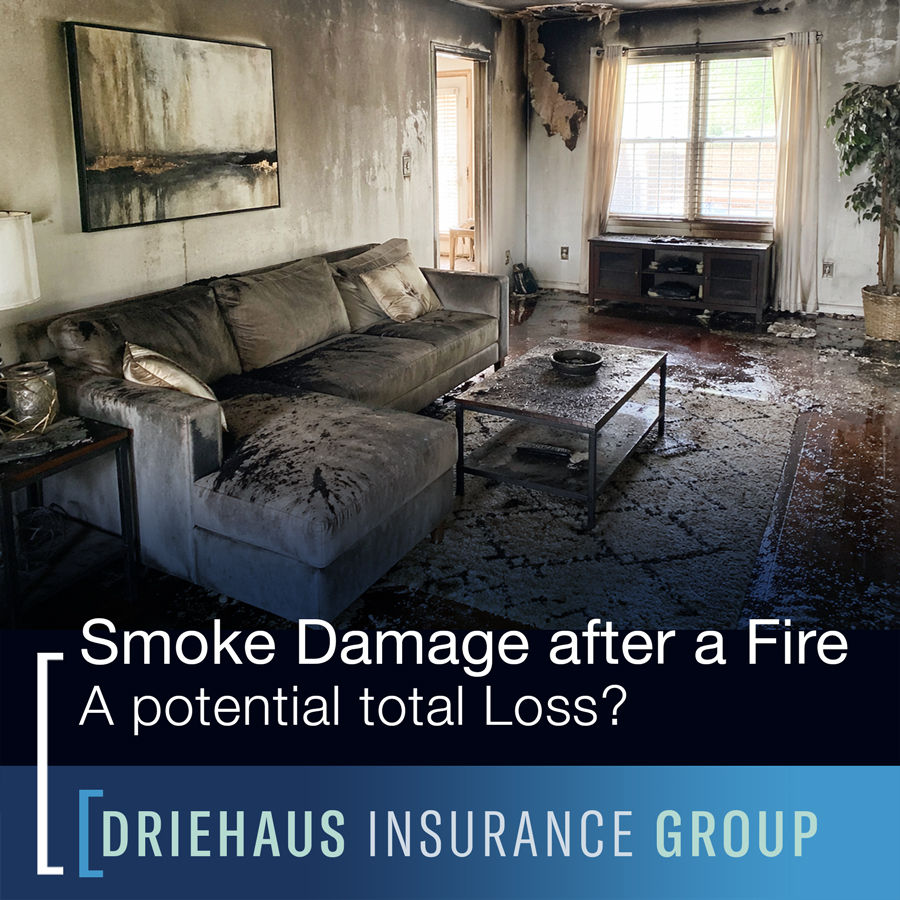
Smoke Damage after a Fire – A potential total Loss?
The insurance business is based on the law of large numbers and the use of historic data to guide its decision making. The past history of fire losses have treated smoke damage as a secondary issue. It meant smoke damage after a fire was a cleanup issue and if needed seal with a coating to make it go away. The primary issues were appearance and odor. This approach was based on a hundred years of experience with fires that were fueled by wood and cellulosic material.
Smoke and Soot Characteristics
Wood smoke residue is a complex mixture of particulates and gases, primarily consisting of carbon (soot), condensed wood tars, and various organic compounds. It is often deposited as a fine, powdery, and sometimes sticky substance on surfaces, with its exact composition depending heavily on the wood type and combustion efficiency. This was the traditional fuel source for fires and the time to reach flashover in a room was over 25 minutes.
Fast forward to today’s fuel package. It is now petroleum based synthetic materials and the flashover time has been reduced to under 5 minutes. Synthetic Materials (Plastics, PVC, Furniture): Releases toxic chemicals including hydrogen cyanide, benzene, styrene, and dioxins. Synthetic materials can generate up to 12.5 times more smoke particles per mass of material consumed than wood.
Now add the fuel of a lithium-ion battery package. Lithium-ion battery smoke residue is a highly toxic, corrosive mixture primarily composed of carbon soot, fluoride compounds, volatile organic compounds (VOCs), and metal oxides (cobalt, nickel, copper, manganese). Key components include hazardous hydrogen fluoride gas, carbon monoxide, and electrolytes like ethylene.
The response of the insurance industry to these changes has been uneven.
Soot Litigation
A court case involving smoke and soot as physical damage, Maxus vs Travelers, was based on soot from a fire that occurred during a builder’s risk project in Birmingham, Alabama in 2018. The initial position by Travelers was that there was no “physical damage”, so the soot deposits were not covered by insurance. The soot was not in the building of fire origin, so no damage occurred.
The presence of dangerous chemicals in soot that was distant from the fire was discovered by the building owner and caused the landlord of the occupied buildings to evacuate the buildings due to a perceived risk from these products of combustion. This was reported to Travelers 6 months after the original fire. The landlord wanted coverage for the remediation of the soot and the lost income from the evacuated buildings.
Travelers declined the claim for the other buildings. The case was in litigation until 2023. Travelers lost the court case and were ordered to pay the claim.
Travelers appealed the case and in August 2025 the appeals court upheld the judgement that Travelers should pay the damages.
This case is important as the occurrence was not in California. There have been a number of lawsuits in California based on wildfire soot damage to unburned homes. This was originally thought to be a California issue. The decisions in Alabama would suggest that the genie is out of the bottle.
Given the higher level of toxins present, it is no longer acceptable to simply wipe down and paint over the soot from a fire. In many cases the surface materials must be removed and replaced. These are soft goods such as carpets, furniture and fabrics to permeable surfaces such as drywall and wood flooring. Mechanical systems such as duct work and furnaces can be contaminated. This means small fires that generate a lot of smoke make the loss much more expensive. This is a game changer for many insurance companies.
Are Residential Sprinklers a Solution?
Smaller fires that are controlled faster would reduce the soot generation. We have the technology to do this. One way to reduce the fire loss would be installation of residential fire sprinkler systems. Originally added to the model codes in 2005, legislators have routinely stripped residential sprinkler systems out of the code adopted by state and local governments. The stated reason is that the cost of the sprinkler system would make homes unaffordable. The insurance industry was silent on this practice. Perhaps findings that soot from the fire can cause a constructive total loss will change this view. The cost of a sprinkler system may now be a very reasonable expense.
Stay Tuned to this Channel
Now that the genie is out of the bottle, the insurance industry will respond to the profit threat. There are generally two paths that insurance companies take when confronted by a new loss exposure, excluding it or pricing for it.
Pricing for the exposure may not be a practical option. For admitted companies the states regulate rates. Converting small losses into large losses across the board would create a cost increase that would be very difficult to get regulatory approval.
The court cases have shown that existing language in the policy did not preclude coverage. Watch for stronger, more specific language to emerge. Look at the Covid related exclusions that are now common as a model for these exclusions. How to add back the coverage will be the next hurdle.
The Driehaus Difference
We recognize this issue and it reinforces the need to have adequate limits of insurance for your property. If a small fire can trigger a total loss due to toxic soot residue, the application of a coinsurance penalty would be a financial threat to you. Since we recognize this issue, we can be an advocate for you and help you manage the claims process. We want to be your insurance provider. Call our office, 513-977-6860 or reach out to use via our website, www.driehausins.com


Comments